
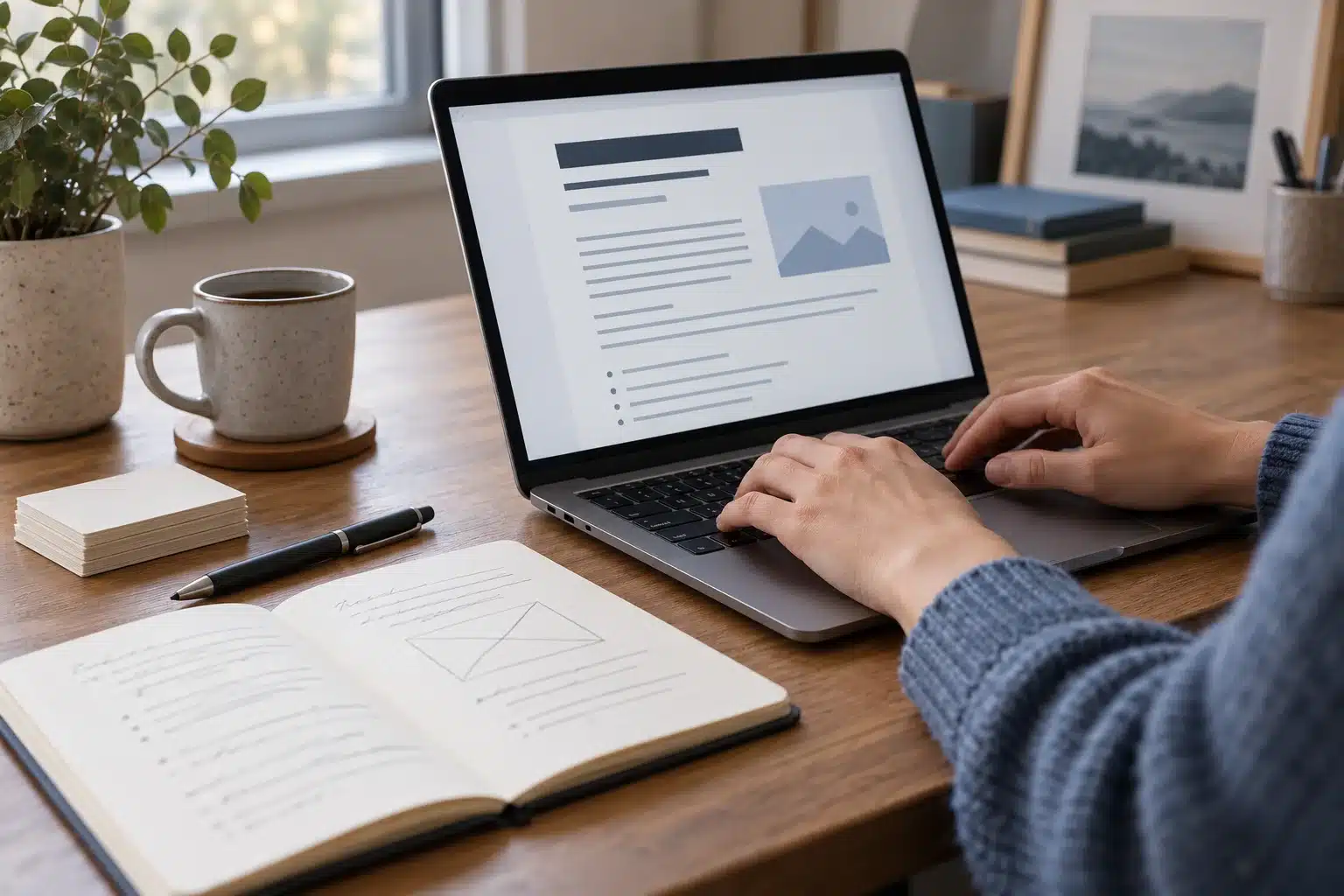
Useful web copy answers the questions a customer brings to the page. It explains what you offer, who it is for, why the details matter, and how to proceed. A polished sentence that leaves those questions unanswered is still unfinished.
Start with one page and one reader. Trying to speak to every possible customer usually produces broad claims that could belong to any business.
Write the customer's question at the top of your draft
For a service page, the question might be: “Can this business solve my problem, and what happens if I contact them?” Gather the information needed to answer it: service scope, location, process, relevant examples, limitations, and next steps.
Use the wording customers use in actual enquiries when it accurately describes the service. Do not copy private messages or publish personal details. The aim is to recognize familiar concerns, not to turn every conversation into a testimonial.
Replace broad claims with concrete information
Consider this invented example for a repair business:
Before: “We provide outstanding solutions with a commitment to excellence.”
After: “We repair wooden gates and replace worn hinges. Send a photo and your location so we can confirm whether the repair is within our service area.”
The second version explains the work and the first step. It is only suitable if those facts are true for the business. Specific wording is helpful because it makes claims testable; it should never become an invitation to invent turnaround times or guarantees.
Put evidence next to the claim it supports
If you describe a particular type of project, show an appropriate example and explain what the business actually did. If you use a customer quote, obtain permission where needed and preserve its meaning. Label demonstration projects clearly.
Features and benefits both matter. “You can update opening hours yourself” describes a capability and its practical use. Explain any training or support limits instead of implying that every future change will be effortless.
Give the page a readable sequence
Use a direct introduction, descriptive headings, short paragraphs, and lists where the items are genuinely parallel. A visitor should be able to scan the headings and understand the page's main points.
A useful service-page sequence is: the service, who it suits, what is included, evidence, how the process works, common questions, and the next action. Adjust that order to the reader's needs rather than forcing every page into an identical template.
Make the next step match the customer's readiness
“Request an estimate” is clearer than “Submit” when an estimate is what happens next. Explain what information helps and what response the customer should expect. Do not promise an immediate reply unless someone can reliably provide it.
Read the finished page aloud, check every factual claim with the business owner, and ask a person unfamiliar with the service to explain the offer back to you. Their unanswered questions are useful editing notes.
Good copy and good layout support each other. See how white space improves page organization and how to keep your website's voice consistent. If your existing pages need a clearer structure, let's discuss the content as part of your website project.
Content Disclaimer: This article was authored by the writer/author indicated above in his/her personal capacity. The opinions and views expressed in this article are the author’s own and do not necessarily reflect the view or opinions of Web Design Just for You.


